
ASTM F1980: Standard for Accelerated Ageing of Sterile Barrier Systems and Medical Devices
ASTM F1980 is a test standard titled, "Standard Guide for Accelerated Ageing of Sterile Barrier Systems and Medical Devices" is a testing procedure that is used to help with the assessment of the sterile integrity of a package and product designed for medical use.
To validate a product and package's Sterile Barrier System (SBS) over the intended storage shelf life, accelerated ageing is conducted to evaluate a package and product's long-term usability and efficacy. ASTM F1980 is a specific accelerated ageing test protocol set forth by ASTM International (American Standards for Test and Measurement International).
It is also advisable to benchmark the product with Shelf Life Test, which is to keep the product at the ambient temperature and humidity conditions for the entire duration of the product's useful life. That means 24, 36,48 or 60 months for 2, 3, 4 and 5 years respectively.
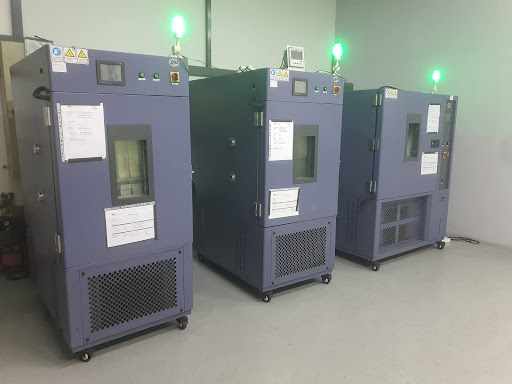
QRA brand of Chambers performing Real
Time Testing in Laboratory in Toh Guan Road
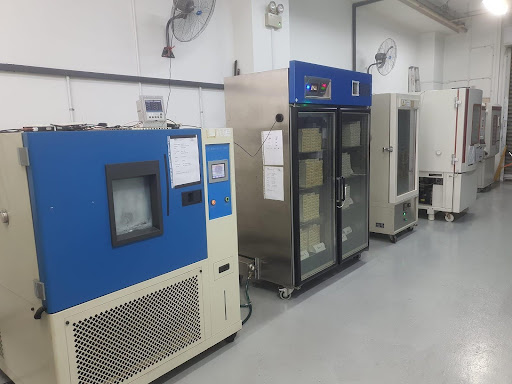
QRA International Lab Chambers performing accelerated aging testing according to ASTM F 1980 - 16 and ASTM F 1980 - 21
ASTM F1980-21 replaced F1980-16 in December 2021. What changed?
The revisions' primary change recommends that the use of controlled humidity during accelerated ageing be considered, findings documented, and used during testing if warranted. The need for controlled humidity should be based on the characterization data of materials used in the medical device, its packaging, and the long-term storage use condition.
Purpose of ASTM F1980
To function safely and effectively, medical devices must maintain their sterile integrity throughout their shelf-life. However, over time, the physical properties of the materials may degrade in certain environments and, as a result, may negatively impact the safety and efficacy of the product. Because they endure so many unique environments while being transported, used, and stored, medical devices must undergo shelf life testing in addition to sterile integrity testing.
ASTM F1980 specifically evaluates the ageing process of a product along with its package and how it impacts sterility and shelf-life. Accelerated ageing tests simulate these conditions by exposing the materials to elevated temperatures for shorter periods of time to represent an equivalent real-time shelf life duration.
ASTM F1980 testing offers valuable safety and performance insights to manufacturers. With a greater understanding of the ageing process on a product and its package system as the result of testing, manufacturers can make more informed decisions regarding the handling, storing, and use of the product. Additionally, precise ageing tests achieved by tight temperature tolerances offer enhanced assurance among regulatory agencies and consumers.

QRA Shelf Life Testing Chamber
FAQ regarding ASTM Standards
In accelerated ageing tests for medical devices, a material or Sterile Barrier System (SBS) is exposed to elevated temperatures for a condensed amount of time. By exposing the testing materials to more extreme conditions during a shorter time frame, researchers can evaluate how a product will age under normal conditions without waiting for the entire desired duration. Armed with this knowledge, manufacturers can determine shelf life, storage, in-use, and transportation parameters more accurately for their product.
Accelerated ageing is a standard practice in the medical device industry for determining shelf life parameters by accelerating the effects of time on a Sterile Barrier System
The accelerated ageing process is based on the relationship between temperature and reaction rate, in which the reaction rate increases as the temperature rises. The Arrhenius Equation is the basic formula used for an accelerated ageing test for medical devices is :
Accelerated Ageing Time (AAT) = Desired Real Time (RT) divided by the Accelerated Ageing Factor (AAF).
In Summary
Every 10 C increase in ageing temperature shortens the AAT by half.
For a product whose expected shelf life is 3 years or 36 months, the device is expected to 'age' or experience :
> For ambient storage 25°C.; keeping the product in a chamber at 35°C., the product is
expected to 'age' in 18 months.
> For ambient storage 25°C.; keeping the product in a chamber at 45°C., the product is
expected to 'age' in 9 months.
> For ambient storage 25°C.; keeping the product in a chamber at 55°C., the product is
expected to 'age' in 4.5 months.
NOTES
The calculated AAT is typically rounded up to the nearest whole day.
QRA does not recommend ageing packaging materials at temperatures exceeding +65°C. Common Accelerated Ageing temperatures (TAA) are +50°C, +55°C, and +60°C.
The ambient temperature (TRT) is typically between +20 °C to +30 °C. A temperature of +25°C is a more conservative approach.
The ageing factor is typically between 1.8 to 2.5 with a value of 2.0 being the most commonly accepted value.
To perform ASTM F1980 accelerated ageing tests for medical devices, the laboratory facility must identify the Q10 value of the testing sample. The Q10 temperature coefficient is a measure of how quickly a material system changes when the temperature is increased by +10°C.
ASTM International sets forth specific test parameters to ensure consistent testing across different lab facilities. The basic parameters for ASTM F1980 include the following:
- Accelerated Ageing Temperatures
- Humidity (F1980 - 21)
- The quantity of product testing samples
Level I Reliability 95% Confidence 95%
Level II Reliability 90% Confidence / 90% Reliability
After the Accelerated Ageing Tests, it is advisable to send your medical products to
a) Peel Test
b) Bubble (full immersion) Test
to determine the Confidence and Reliability Levels. QRA can advise you on these matters.
Using the Arrhenius Equation, the TRT should accurately reflect the actual product storage and in-use conditions, generally between 20 °C and 30 °C.
Accelerated ageing temperature should be identified before testing. This is done by having in-depth knowledge of your materials, product, and packaging. It is not recommended to exceed +65 °C.
The need for controlled humidity during accelerated ageing should be identified before testing; if materials are subject to moisture degradation, 45% - 55% RH is suggested. This input should be determined with your material providers' assistance.
A Q10 factor needs to be determined, which involves testing materials at various temperatures and defining the differences in reaction rate for a 10° change in temperature. A typical Q10 factor used during testing is 2.
Accelerated ageing factor should be specified using the following equation:
AAF = Q10 (TAA-TRT) /10
QRA's sales professionals can walk you through your product ageing test needs.
The ASTM F1980 standard suggests using an accelerated ageing temperature below 60 °C. Ageing your product at a greater temperature provides the advantage of a faster simulation of the ageing interval, but this comes with risks for particular products and packaging materials.
Medical devices are often engineered with delicate materials that may drastically change when exposed to temperatures exceeding +60 °C. Finding out if your medical product or device may be adversely affected by long periods of high heat or low humidity is a good place to start when choosing the best accelerated ageing temperature. Westpak's experts can help you define the ideal temperature parameters for your products and packaging.
Common Accelerated Ageing Temperatures: 50°C, 55°C, 57°C or 60°C
Common Accelerated Aging Humidity Setpoints : 50% 55% 60% 65% or 70%
After a testing sample has undergone the accelerated ageing process, its physical properties and package integrity will be compared against various ageing time points.
This includes visual inspections per ASTM F1886, sterile integrity testing
- Burst
- Bubble
- Dye
- Peel testing
You will want to test at all-time points noted on your packaging shelf-life label. When this process is complete, QRA through its partner company will deliver a comprehensive report specifying the ageing conditions and testing standards applied, as well as documenting the equipment used. Finally, we'll detail the outcomes of the post-aging tests, and any statistical methodologies utilized.